Frankenstein: which one are you reading?
There are two, and they disagree about whether Victor could have chosen otherwise.
7.8from 3,074 reader ratings · 211 pages · 12 adaptations
Mary Shelley wrote Frankenstein at eighteen and published it anonymously in 1818. Thirteen years later, by then a widow, she issued a revised version — and that is the one printed for the next century and a half. Most editions do not say which one you are holding.
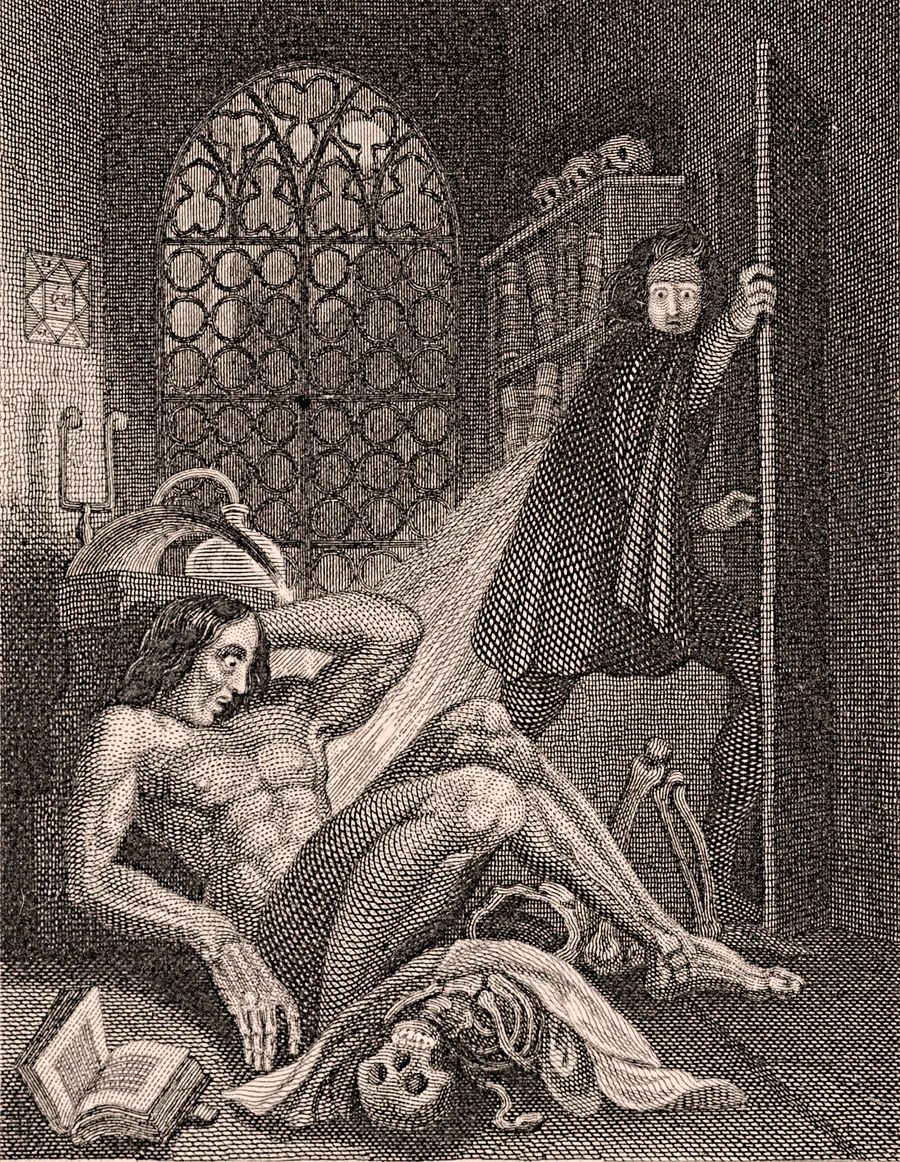
Two books under one title
Not copy-editing — the meaning changes
1818
anonymous, three volumes, 500 copies
- Elizabeth is Victor’s cousin
- Victor chooses. The science is his decision and his fault
- Harsher, more radical, closer to her father’s philosophy
- A preface written by Percy Shelley — which led some readers to assume he was the author
Scholarly editions today usually print this one.
1831
under her name, one volume, a popular series
- Elizabeth is a foundling, taken in — the incest overtone disappears
- Victor yields to destiny. Guilt dissolves into fatalism
- Gentler, more religious, more approachable
- A new introduction in which Mary tells the Villa Diodati story — the most famous pages in the book
This is the one printed as "Frankenstein" for decades.
Which to pick. First time, for pleasure — 1831: it carries the introduction about that stormy summer on Lake Geneva and reads more smoothly. If you want the book an eighteen-year-old actually wrote — 1818, because the later version is the work of a woman who had buried her husband and three children and depended on her father-in-law for money. It was written from somewhere else entirely.
The year without a summer
June 1816, Villa Diodati on Lake Geneva
A year earlier Mount Tambora had erupted in Indonesia, and the ash in the atmosphere took Europe’s summer away. It rained for weeks over the lake. Shut in a rented villa, Byron, Percy Shelley, the eighteen-year-old Mary Godwin, her stepsister Claire and Byron’s physician John Polidori read German ghost stories aloud to each other.
Byron proposed a challenge: let each of us write one. Out of the same evening came Polidori’s "The Vampyre" — the first aristocratic literary vampire, Dracula’s ancestor.
The two most famous monsters in European literature were made in the same rainy week, in one drawing room.
The monster who does not speak
What cinema took from this novel
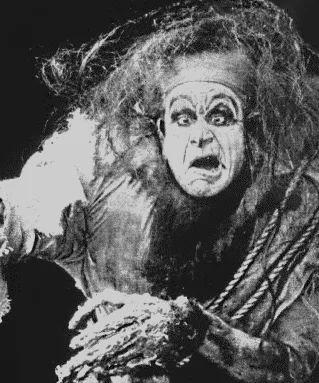
In the book the creature is eloquent. He learns to read by listening to a family through a crack in a wall, works through Paradise Lost and Plutarch’s Lives, and then delivers an indictment that runs for several chapters and is the best thing in the novel. He has no name, but he has arguments.
Cinema took his voice away in 1931 and left a grunt. That is why Frankenstein is a book almost everyone knows and almost nobody has read: everyone knows the monster from the screen, and the one in the book is somebody else.
And this: Frankenstein is the scientist’s surname, not the creature’s. The creature is never named — the novel calls him "the being", "the daemon", "the wretch".
Questions people actually ask
Which version should I read, 1818 or 1831?
First time, 1831 — it has the Villa Diodati introduction and reads more smoothly. If you want the original, in which Victor carries full responsibility for what he did, read 1818. Scholarly editions today usually print 1818.
How do I tell which edition I have?
Look at chapter one. If Elizabeth is Victor’s cousin, you have 1818. If she was taken in from an Italian cottage, you have 1831. Second clue: the 1831 text opens with Mary’s introduction about the stormy summer.
Is Frankenstein the monster?
No. Victor Frankenstein is the student who brought the creature to life. The creature is given no name in the book — and that is one of his charges against his maker.
How long is it, and is it hard?
211 pages, short for a classic. The structure is nested: Captain Walton’s letters, Victor’s account inside them, and the creature’s account inside that. It sounds complicated and reads naturally.
Can I read it free?
The English original, in both versions: the 1818 text and the 1831 text at Project Gutenberg. Translations are separate — a translation carries its own copyright.
Read it
Both versions are free. A printed edition is not — and it tells you which text it prints.
Affiliate link: buying through it supports BookRank at no extra cost to you.
Where next
Its place in the horror ranking, all 12 adaptations and the scores behind the number — plus this page in eight other languages.