Headphones for audiobooks: bone conduction vs in-ear
An audiobook has one advantage over paper: you can listen when your eyes and hands are busy. On a walk, at the shops, on the bike, at the gym, in the car and in bed at night. The catch is that each of those situations calls for different headphones.
I listen to books every day and use three kinds of headphones. This isn't a ranking or a comparison of models: I only write about what I use myself, with the pros and cons that showed up in practice.

Amazon links in this article are affiliate links: if you buy something, we earn a small commission and your price stays the same.
Which headphones for audiobooks? A cheat sheet for every situation
For each situation, here are the headphones that work for me. Tapping the headphones takes you to an Amazon search (an affiliate link).
- Walks, shopping
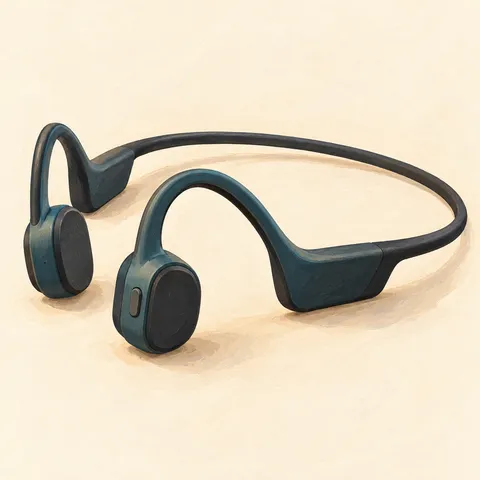 Walks, shoppingBone conductionears open: you hear cars, people, the cashier
- Cycling CyclingBone conductionyou hear the traffic; in wind you need more volume
- Running RunningBone conductionthey don't slip out with sweat, no cable flapping
- Gym, bench
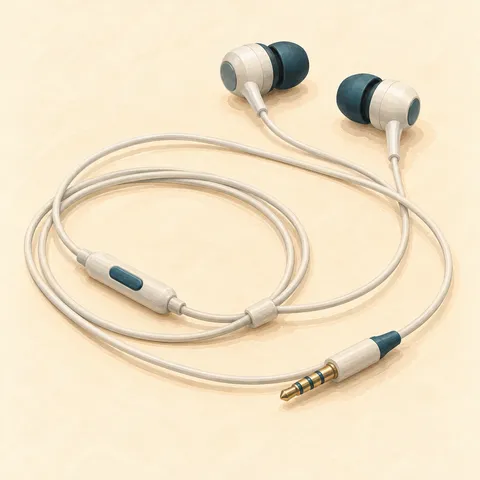 Gym, benchWired in-earsthe band stops you lying your head flat
- Winter, hat on Winter, hat onWired in-earsthey don't stick out of the ear, so the hat fits
- Sleeping on your side
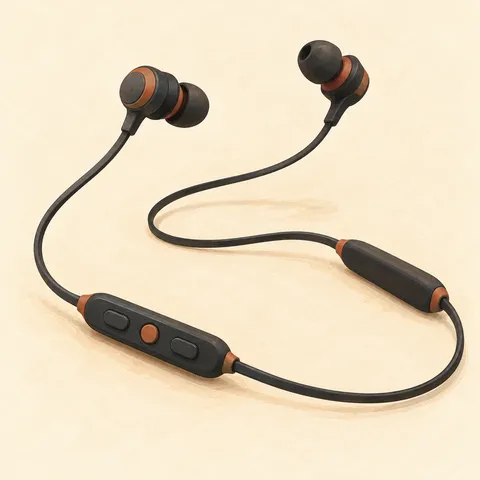 Sleeping on your sideNeckband earbudsone earbud in, the other ear free
- Car with kids Car with kidsCar speakersthe whole family listens to one story
Shokz bone-conduction headphones: my verdict, pros and cons
Day to day I use bone-conduction headphones from Shokz. They don't go in your ears: they sit just in front of them, and the sound travels through your cheekbones. Your ears stay completely open, and the whole thing is held in place by a band that wraps round the back of your head.
For walks and shopping they're spot on. You listen to your book and still hear everything around you: a car behind you, someone asking you something, the cashier when you pay. No need to take anything out or hit pause.
- ears open: you hear the traffic and the people around you
- they don't fall out when you run or sweat
- no cable flapping about as you move
- for walks and shopping, pretty much ideal
- in winter a hat won't go over the band sticking out at the back of the head
- with sunglasses, the arms of the glasses and the headphones get in each other's way at the ears
- on the bike, wind noise drowns out the sound and you have to listen very loud
- no good for sleeping: you can't lie down in them
- on a gym bench the band stops you lying your head flat
Bone-conduction headphones for cycling: wind, volume and audio dramas
On the bike, bone-conduction headphones work well because you can hear cars and other cyclists. There's one catch: wind creates a roar, so to hear anything at all you have to turn the volume up very high. On top of that, some audiobooks are simply recorded too quietly, so the volume goes up even further. I ride in Poland, where cycling with headphones is allowed. In the UK it isn't against the law either, but the Highway Code tells riders to avoid distractions such as loud music. In the US it depends on the state: California, for example, bans earphones in, resting on or covering both ears while cycling or driving, and bone-conduction headphones that hook over both ears may count. Check your local rules, and if the wind is so loud that you can no longer hear the traffic, pause the book.
That's where the trouble starts. If someone calls mid-ride or my Garmin announces how many kilometres I've done, the ringtone and the announcement come through at the same cranked-up volume. It gets so loud that it actually hurts.
Audio dramas are even harder. Some characters are recorded more quietly than the rest, and on the bike, on a noisy road surface, some lines just get lost.
Before you set off, check how loud your phone's ringtone and your sports app's announcements will be with the audiobook turned up. Better to turn them down straight away than to hear them at full blast mid-ride.
Headphones for running and the gym
For running, bone-conduction headphones beat in-ears. Once you're sweaty, in-ears can fall out, and with wired ones the cable flaps about and bangs against your neck. Bone-conduction headphones stay on your head and there's nothing to lose.
At the gym it all depends on the exercise. On the bench press you lie your head flat, and the band at the back of your head is right in the way. For bench work, in-ears are the better choice.
Headphones that fit under a winter hat

The band of bone-conduction headphones sticks out at the back of the head, and a hat simply won't go over it. So in winter I switch to in-ears that don't stick out of the ear. The hat covers my ears as usual, and the book keeps playing.
Headphones for sleeping on your side: one earbud in
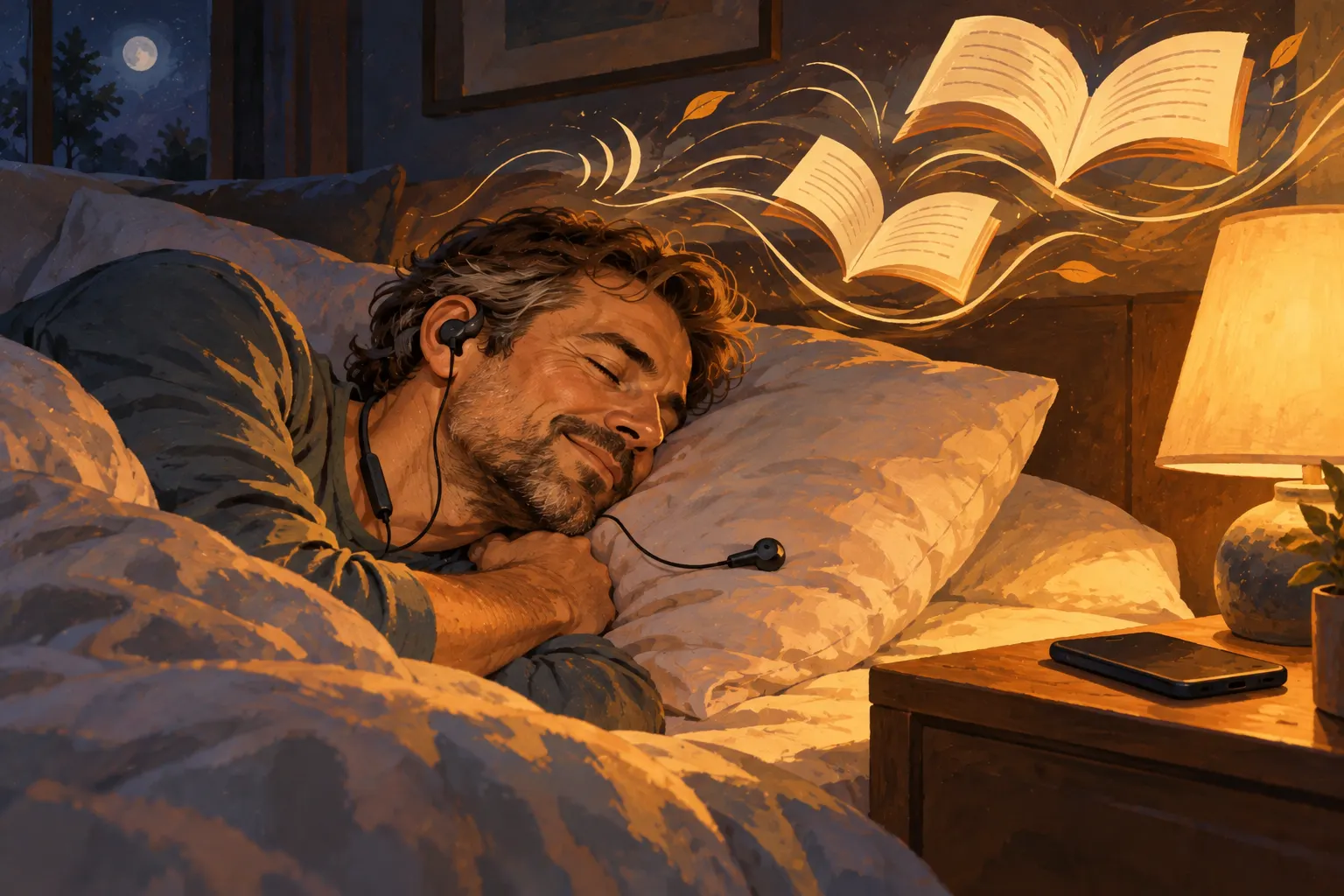
In the evening I listen in bed, and I sleep on my side. So I put in just one earbud: in the ear facing up. The ear I'm lying on stays free, with nothing digging into it.
What works for me is ordinary wired in-ears or wireless JBL neckband earbuds: two earbuds joined by a cord that rests on the back of the neck. Mine cost about 130 PLN in Poland (roughly £25 or $35). One goes in my ear, the other just hangs there.
With true wireless earbuds (two separate buds in a case) I had two problems. Mine had to be worn in both ears, and the one on the pillow side dug in when I lay on my side. And when I took one out, they switched off. Not every model works like that, but it's worth checking before you buy.
Buying headphones for listening in bed? Check that they play with just one earbud in and don't switch off when you take the other one out.
Audiobooks for the car with kids: what we listen to on the road

In the car, audiobooks are perfect. The whole family listens to one story through the car speakers, and the miles fly by.
For shorter trips: Sherlock Holmes for kids and Harry Potter
For shorter journeys our favourites are the stories from a Polish children's series of Sherlock Holmes retellings published by Tandem. They're simplified retellings of Conan Doyle's Sherlock Holmes adventures, each about an hour long: one mystery per trip. There are dozens of volumes, so they last a long time. In English, look for a children's retelling of Sherlock Holmes.
- Sherlock Holmes retold for childrenGood for: shorter car trips with kidsOurs is Tandem's Polish series: simplified Conan Doyle, one mystery per volume, ages 6–8 according to the publisher.See on Amazon →
Harry Potter works brilliantly too, especially the first books, which are the shortest in the series.

For long journeys: multi-book fantasy and science fiction series
For long journeys I pick multi-book series you can sink into for hours: Peter V. Brett's Demon Cycle, Michael J. Sullivan's Riyria, Pierce Brown's Red Rising, Andrzej Sapkowski's The Witcher and Brandon Sanderson's Stormlight Archive. Each one lasts for more than one trip.
These are books for adults and older teens, so with younger children it's better to stick with Holmes and Potter.




The headphones I use every day
Nobody paid me for this article. Below are exactly the kinds of headphones I use every day and what I use them for. I don't compare them with other brands: I only write about what I use myself. The “See on Amazon” buttons are affiliate links: if you buy something, we earn a small commission, but that doesn't change what I write here.
- Shokz bone-conduction headphonesGood for: walks, shopping, running, cyclingEars open and nothing falls out. Not under a winter hat, not for sleeping, not for the bench.See on Amazon →
- JBL neckband earbuds (cord round the neck)Good for: listening in bed on your sideOne earbud in, the other hangs. Mine cost about 130 PLN in Poland (roughly £25 or $35).See on Amazon →
- Ordinary wired in-earsGood for: winter under a hat, sleeping, the gymThe simplest option; no charging needed.See on Amazon →
What to listen to? Long series that last for weeks
Long series you can sink into for weeks are the best to listen to. In our rankings you'll find their volumes with reader ratings, every series has its reading order, and in the Recommended section I write about series and books I've listened to from start to finish.
Questions and answers
Are bone-conduction headphones good for audiobooks?
For listening on walks, at the shops and on the bike, yes: your ears stay open and you can hear what's going on around you. They're weaker in the wind and with quietly recorded audio dramas.
What are the downsides of bone-conduction headphones?
For me: in winter a hat won't go over the band, with sunglasses the arms get in each other's way at the ears, in the wind you have to listen very loud, and they're no good for sleeping or for the gym bench.
Can you wear bone-conduction headphones with glasses?
With sunglasses I have a problem: the arms of the glasses and the headphones meet at the ears and get in each other's way.
Are bone-conduction headphones good for cycling?
Yes, because you can hear the traffic around you. In strong wind you have to listen loud, though, so turn down your ringtone and sports app announcements beforehand. Rules differ: some US states, such as California, ban earphones in, resting on or covering both ears while cycling, which may include bone-conduction headphones.
Can you wear a hat over bone-conduction headphones?
Not in my experience: the band sticks out at the back of the head and a hat won't go over it. In winter I use in-ears.
What headphones are best for sleeping on your side?
Ones that play with a single earbud in: wired, or wireless with a neckband cord. True wireless earbuds worn in both ears dig in on the pillow side, and some switch off when you take one out.
Are bone-conduction headphones good for running?
Yes, that's their strong point: they don't fall out when you sweat, and there's no cable flapping about. In-ears can fall out.
What audiobooks are good for the car with kids?
For shorter trips we like hour-long children's retellings of Sherlock Holmes (our Polish series is for ages 6–8, according to the publisher) and Harry Potter. For long journeys we listen to multi-book fantasy series such as The Witcher or the Demon Cycle, but those are books for adults and older teens.