#20 in Economics
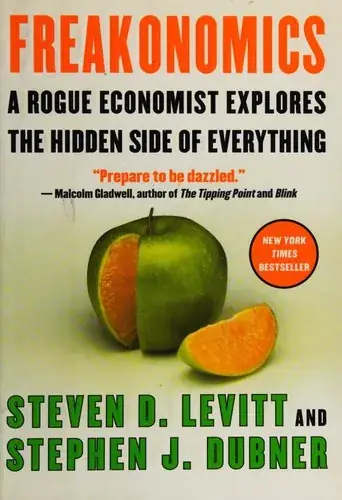
Freakonomics
- 320
- Pages
- about 6 h
- Reading time
- NYT bestseller · 1 week on the list, peaked at #9
Affiliate link: buying through it supports BookRank at no extra cost to you.
Our view
An economist and a journalist apply data to everyday questions and keep arriving at answers that contradict common sense. The chapters stand largely on their own and read quickly, which makes the book light and entertaining. Some readers find it shallower than its title promises: too reliant on incentives and anecdote, and nearer to sociology than to economics. It suits those who want a lively introduction more than a rigorous one.
The view of the BookRank editors, written from readers’ ratings and comments. It does not affect the score or the book’s place in a ranking.
About the book
Freakonomics: A Rogue Economist Explores the Hidden Side of Everything is the debut non-fiction book by University of Chicago economist Steven Levitt and New York Times journalist Stephen J. Dubner. Published on April 12, 2005, by William Morrow, the book has been described as melding pop culture with economics. By late 2009, the book had sold over 4 million copies worldwide. Based on the success of the original book, Levitt and Dubner have grown the Freakonomics brand into a multi-media franchise, with a sequel book, a feature film, a regular radio segment on National Public Radio, and a weekly blog.
Reading order · Freakonomics
Full order & progress →- FreakonomicsThis book
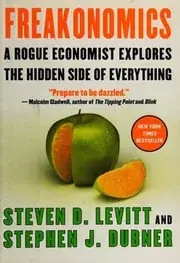 7.77.7 / 10
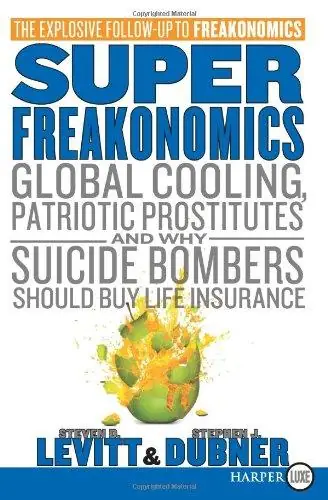
- SuperFreakonomics
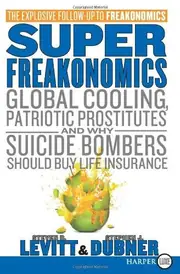 7.87.8 / 10
- Think Like a Freak
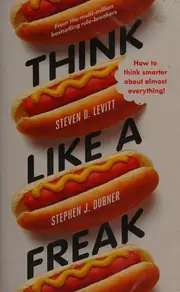 7.67.6 / 10
- When to Rob a BankWhen to Rob a Bank–Not ranked yet
Where the score comes from
The sources average 7.7 across 1,572 ratings. With that many, the reader vote carries 91% of the weight and the score stays at 7.7 — the Economics average of 7.8 barely moves it.
| Source | Average | Ratings | Weight |
|---|---|---|---|
| Open Library | 7.8 | 187 | 12% |
| Hardcover | 7.7 | 1.4K | 88% |
Frequently asked
How long is Freakonomics?
It has 320 pages — longer than 53% of the ranked books in Economics.
In this book
Themes this book shares with others — each leads to the best books on it.
If you liked this
The same shelf — Economics — and a score of 7.8, the closest to this book.