#41 in Popular science
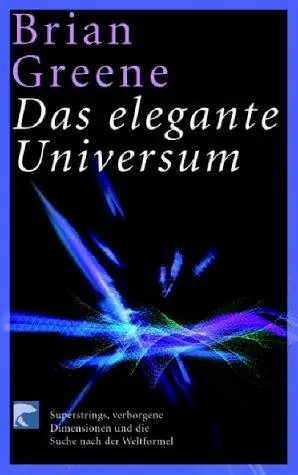
The Elegant Universe
- 464
- Pages
- about 9 h
- Reading time
Affiliate link: buying through it supports BookRank at no extra cost to you.

Our view
“The Elegant Universe” is a patient, enthusiastic guide to string theory, built up from relativity and quantum mechanics by vivid analogy. Brian Greene writes in plain language for the curious non-physicist. Some readers say it happily makes the head spin; some find it hard to tell established science from hypothesis in his account, and some regret how little the theory has advanced since the book was written.
The view of the BookRank editors, written from readers’ ratings and comments. It does not affect the score or the book’s place in a ranking.
About the book
The Elegant Universe: Superstrings, Hidden Dimensions, and the Quest for the Ultimate Theory(1999) is a popular science book by Brian Greene. He explains the two great pillars of modern physics, general relativity and quantum mechanics, and how they might be united by string theory. It was a finalist for the Pulitzer Prize for General Nonfiction and won the Royal Society Prize for Science Books. In 2003, it was the basis for a NOVA documentary of the same name. That year, a new edition was released with an updated preface.
Where the score comes from
The sources average 8.0 across 244 ratings — not yet many, so the reader vote carries 62% of the weight and the rest pulls toward the Popular science average of 8.3. That is how 8.1 comes out.
| Source | Average | Ratings | Weight |
|---|---|---|---|
| Open Library | 7.9 | 28 | 12% |
| Hardcover | 8.0 | 210 | 86% |
| Google Books | 10.0 | 6 | 3% |
Frequently asked
How long is The Elegant Universe?
It has 464 pages — longer than 79% of the ranked books in Popular science.
In this book
Themes this book shares with others — each leads to the best books on it.
If you liked this
Same shelf — Popular science — with scores between 8.0 and 8.3, closest to this book.