#11 in Psychology
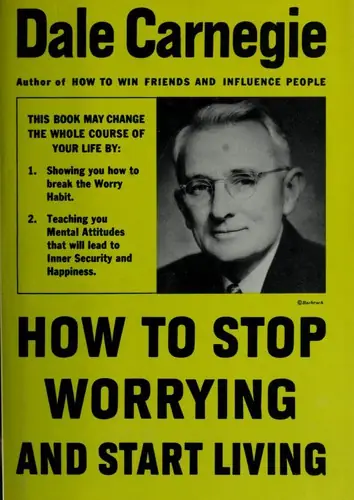
How to Stop Worrying and Start Living
- 348
- Pages
- about 6 h
- Reading time
Affiliate link: buying through it supports BookRank at no extra cost to you.

Our view
The advice in “How to Stop Worrying and Start Living” is plain and practical, with examples of how to put it to use. Carnegie says he wrote the book because worry had once made him ill. Some readers note that most of what he recommends is common sense and value him for showing how to act on it. Others expect to return to it often.
The view of the BookRank editors, written from readers’ ratings and comments. It does not affect the score or the book’s place in a ranking.
About the book
How to Stop Worrying and Start Living is a self-help book by Dale Carnegie first printed in 1948. Carnegie says in the preface that he wrote it because he "was one of the unhappiest lads in New York". He said that he made himself sick with worry because he hated his position in life, which he credits for wanting to figure out how to stop worrying. The book's goal is to lead the reader to a more enjoyable and fulfilling life, helping them to become more aware of, not only themselves, but others around them. Carnegie tries to address the everyday nuances of living, in order to get the reader to focus on the more important aspects of life.
Where the score comes from
The sources average 8.3 across 111 ratings — not yet many, so the reader vote carries 43% of the weight and the rest pulls toward the Psychology average of 7.9. That is how 8.1 comes out.
| Source | Average | Ratings | Weight |
|---|---|---|---|
| Open Library | 8.3 | 16 | 14% |
| Hardcover | 8.3 | 95 | 86% |
Frequently asked
How long is How to Stop Worrying and Start Living?
It has 348 pages — shorter than 59% of the ranked books in Psychology.
In this book
Themes this book shares with others — each leads to the best books on it.
If you liked this
Same shelf — Psychology — with scores between 7.7 and 8.2, closest to this book.