Nº 18 em Economia
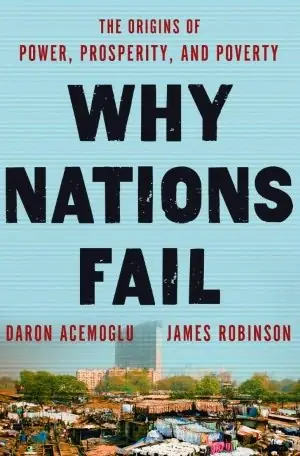
Por que as Nações Fracassam
- 529
- Páginas
- cerca de 10 h
- Tempo de leitura
- Best-seller do NYT · 1 semana na lista
Link de afiliado: comprar por ele apoia o BookRank sem custo extra para você.

Sobre o livro
Shortlisted for the Financial Times and Goldman Sachs Business Book of the Year Award 2012.Why are some nations more prosperous than others? Why Nations Fail sets out to answer this question, with a compelling and elegantly argued new theory: that it is not down to climate, geography or culture, but because of institutions. Drawing on an extraordinary range of contemporary and historical examples, from ancient Rome through the Tudors to modern-day China, leading academics Daron Acemoglu and James A. Robinson show that to invest and prosper, people need to know that if they work hard, they can make money and actually keep it - and this means sound institutions that allow virtuous circles of innovation, expansion and peace.Based on fifteen years of research, and answering the competing arguments of authors ranging from Max Weber to Jeffrey Sachs and Jared Diamond, Acemoglu and Robinson step boldly into the territory of Francis Fukuyama and Ian Morris. They blend economics, politics, history and current affairs to provide a new, powerful and persuasive way of understanding wealth and poverty.
De onde vem a nota
As fontes têm média 7,7 em 226 avaliações — ainda poucas, então o voto dos leitores carrega 60% do peso e o restante puxa para a média de Economia, 7,8. É assim que sai 7,8.
| Fonte | Média | Avaliações | Peso |
|---|---|---|---|
| Open Library | 7,4 | 34 | 15% |
| Hardcover | 7,8 | 192 | 85% |
Perguntas frequentes
Quantas páginas tem Por que as Nações Fracassam?
Tem 529 páginas — mais que 85% dos livros do ranking em Economia.
Neste livro
Temas que este livro partilha com outros: cada um leva aos melhores livros sobre ele.
Se você gostou deste
A mesma estante — Economia — com notas entre 7,7 e 7,8, as mais próximas deste livro.