nr 18 w kategorii Ekonomia
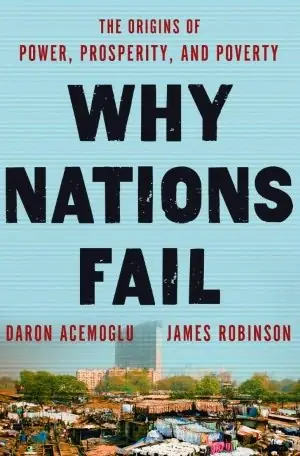
Dlaczego narody przegrywają
- 529
- Stron
- ok. 10 godz.
- Czas czytania
- Bestseller NYT · 1 tydzień na liście
Link partnerski: kupując przez niego, wspierasz BookRank. Cena się nie zmienia.

O książce
Shortlisted for the Financial Times and Goldman Sachs Business Book of the Year Award 2012.Why are some nations more prosperous than others? Why Nations Fail sets out to answer this question, with a compelling and elegantly argued new theory: that it is not down to climate, geography or culture, but because of institutions. Drawing on an extraordinary range of contemporary and historical examples, from ancient Rome through the Tudors to modern-day China, leading academics Daron Acemoglu and James A. Robinson show that to invest and prosper, people need to know that if they work hard, they can make money and actually keep it - and this means sound institutions that allow virtuous circles of innovation, expansion and peace.Based on fifteen years of research, and answering the competing arguments of authors ranging from Max Weber to Jeffrey Sachs and Jared Diamond, Acemoglu and Robinson step boldly into the territory of Francis Fukuyama and Ian Morris. They blend economics, politics, history and current affairs to provide a new, powerful and persuasive way of understanding wealth and poverty.
Skąd bierze się wynik
Średnia ze źródeł to 7,7 z 226 ocen — to jeszcze niewiele, więc głos czytelników waży 61%, a reszta ciągnie w stronę średniej kategorii Ekonomia (7,8). Stąd wynik 7,8.
| Źródło | Średnia | Ocen | Waga |
|---|---|---|---|
| Open Library | 7,4 | 34 | 15% |
| Hardcover | 7,8 | 192 | 85% |
Najczęstsze pytania
Ile stron ma Dlaczego narody przegrywają?
Ma 529 stron — więcej niż 85% książek z rankingu w kategorii Ekonomia.
W tej książce
Motywy i nastrój, które łączą ją z innymi — każdy prowadzi do najlepszych książek z tym motywem.
Jeśli to Ci się podobało
Ta sama półka — Ekonomia — i wynik między 7,7 a 7,8, najbliżej tej książki.