N.º 21 en Economía
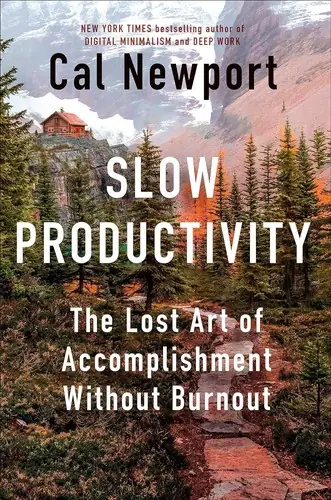
Slow Productivity
- 257
- Páginas
- unas 4,5 h
- Tiempo de lectura
Enlace de afiliado: comprar a través de él apoya a BookRank sin coste adicional para ti.
Sobre el libro
A New York Times, Washington Post, USA Today, and IndieBound bestseller "Brilliant and timely" — Oliver Burkeman ~ Do Fewer Things. Work at a Natural Pace. Obsess over Quality. ~ From the New York Times bestselling author of Digital Minimalism and Deep Work, a groundbreaking philosophy for pursuing meaningful accomplishment while avoiding overload Our current definition of “productivity” is broken. It pushes us to treat busyness as a proxy for useful effort, leading to impossibly lengthy task lists and ceaseless meetings. We’re overwhelmed by all we have to do and on the edge of burnout, left to decide between giving into soul-sapping hustle culture or rejecting ambition altogether. But are these really our only choices? Long before the arrival of pinging inboxes and clogged schedules, history’s most creative and impactful philosophers, scientists, artists, and writers mastered the art of producing valuable work with staying power. In this timely and provocative book, Cal Newport harnesses the wisdom of these traditional knowledge workers to radically transform our modern jobs. Drawing from deep research on the habits and mindsets of a varied cast of storied thinkers – from Galileo and Isaac Newton, to Jane Austen and Georgia O’Keefe – Newport lays out the key principles of “slow productivity,” a more sustainable alternative to the aimless overwhelm that defines our current moment. Combining cultural criticism with systematic pragmatism, Newport deconstructs the absurdities inherent in standard notions of productivity, and then provides step-by-step advice for cultivating a slower, more humane alternative. From the aggressive rethinking of workload management, to introducing seasonal variation, to shifting your performance toward long-term quality, Slow Productivity provides a roadmap for escaping overload and arriving instead at a more timeless approach to pursuing meaningful accomplishment. The world of work is due for a new revolution. Slow productivity is exactly what we need.
De dónde sale la puntuación
Las fuentes promedian 7,5 sobre 192 valoraciones, aún pocas, así que el voto lector pesa un 51% y el resto tira hacia la media de Economía (7,9). De ahí sale 7,7.
| Fuente | Media | Valoraciones | Peso |
|---|---|---|---|
| Hardcover | 7,5 | 192 | 100% |
Voces de lectores
Las reseñas más valoradas en Hardcover (con autoría).
“Sometimes a book comes along with exactly what you need when you need it. This one helped me reflect to on my own mindset about productivity and make adjustments to be happier and healthier. The main premise of the book is stated early (on page 8): A philosophy for organizing knowledge work efforts in a sustainable and meaningful manner based on the following three principles. - Do fewer things. - Work at a natural pace. - Obsess over quality. ”
“some of this I vibed with and some of this was absolutely nuts e.g. just sneaking away from work for an afternoon every month to go to the cinema?? (even if you work in an office)”
Preguntas frecuentes
¿Qué nota tiene el libro Slow Productivity?
7,7 sobre 10, a partir de 192 valoraciones de lectores en 1 fuentes independientes.
¿Merece la pena leer Slow Productivity?
Los lectores le dan 7,7/10 con 192 valoraciones, por delante del 20 % de la estantería Economía.
¿Cuánto se tarda en leer «Slow Productivity»?
Unas 4,5 horas a ritmo medio: 257 páginas.
¿En qué puesto está el libro Slow Productivity?
N.º 21 en Economía en la instantánea actual.
¿Cuánto ocupa Slow Productivity?
Tiene 257 páginas: menos que el 82 % de los libros clasificados en Economía.
Si te gustó este
La misma estantería — Economía — y una puntuación de 7,8, la más cercana a este libro.